A Targeted Advertisement Slipped Through the Cracks
Rental insurance ads in a new apartment
2026-08-14
Earlier this week, I was watching YouTube on my roommate's Google TV in a new apartment and got served an ad for rental insurance.
Usually, I don't see ads. I run aggressive adblockers on my personal devices which block basically all ads except:
- Pieces of content that include ads in them (fairly common), or
- Delivered from domains that had not yet been added to the blocklist of the adblocker (currently rare, but uBlockOrigin just gave up on trying to stop ads on Facebook1, so I may see more of these in the future), or
- Literally baked into the code of the site (incredibly rare, since embed static images of ads directly into the HTML of its site [rather than using an ad iFrame hosted on a separate ad-serving domain] has not been common since Web 1.0)
Since I have targeted ads turned off, usually those that I do see are pretty generic: what sort of products or services would the average person in the location of my VPN exit node buy? Sometimes, these missed the mark in hilarious ways. However, this ad was spot-on correct. Some ad company had picked up on the facts that I had signed a new lease and was looking for rental insurance, and the ad had been successfully delivered to its target.
How did they know?
The most obvious possibility was that by obtaining quotes on insurance company websites, I had somehow consented to that data being collected and sold. I had been looking at quotes online over the past couple weeks, and it was comical how quickly after I closed the tab that I began getting phone calls from the companies practically begging me to sign for it. Surely, they were selling the data that "Thomas Howells is looking for rental insurance" to data brokers in order to hedge their bets that I might not buy the insurance from them. Whatever fractions of a penny they obtained from selling that data was worth much less to them than the $20-30/month I would pay for insurance, but it was better than absolutely nothing. The same thing likely happened to my roommate as well.
Maybe Facebook had picked up on the fact that I was moving cities and had recently signed a lease, which would be fairly easy to do so by just observing my Facebook Marketplace searches for apartments (that quickly ceased after I had found somewhere to live). Facebook then sold this data to a data brokerage so that insurance company marketing teams could engage themselves in the real-time ad bidding to serve me an ad.
The most paranoid explanation is that someone mentioned rental insurance out loud in the apartment. The living room has at least two Internet of Things ("IoT") devices with microphones in them: the Google TV remote and the Amazon Alexa. All of our phones have microphones too. All of these devices are constantly running software that is listening for choice phrases- "hey Siri", "hey Alexa", "hey Google"- and only then do they actually activate and start transmitting data to the cloud. Of course, we would never know if these devices truly are passively listening and running client-side voice analysis software, even if we listen in on their encrypted network traffic. Such is the nature of closed-source software, so all we can really do is trust that they're not doing that. But we would never know if they were.
I will never know how this ad was delivered to me. Maybe it was random, a consequence of this ad being targeted towards the demographic of person the ad delivery algorithm guessed lives at that digital ad ID. I moved in August, 1 month before my graduate program started, to an area of Montreal in which many students live (hopefully this is non-specific enough to avoid doxxing myself). Insurance companies know that students will be looking for rental insurance. Maybe it was just a case of "right place, right time."
It doesn't matter to the insurance company, and it doesn't matter to YouTube. The insurance company paid YouTube to deliver the ad to someone who would likely buy their product in the process of real-time ad bidding2. Everyone came out happy, even if I never end up buying insurance from that company.
But I'm not happy. Even if this ad in particular is randomly-delivered, I hate that I'm surrounded by companies that think they're doing me a service by collecting and selling my data to whoever will buy it. Why should companies get to profit off my data? Why should I be thankful that I'm delivered ads for products and services that the companies guess that I will like?
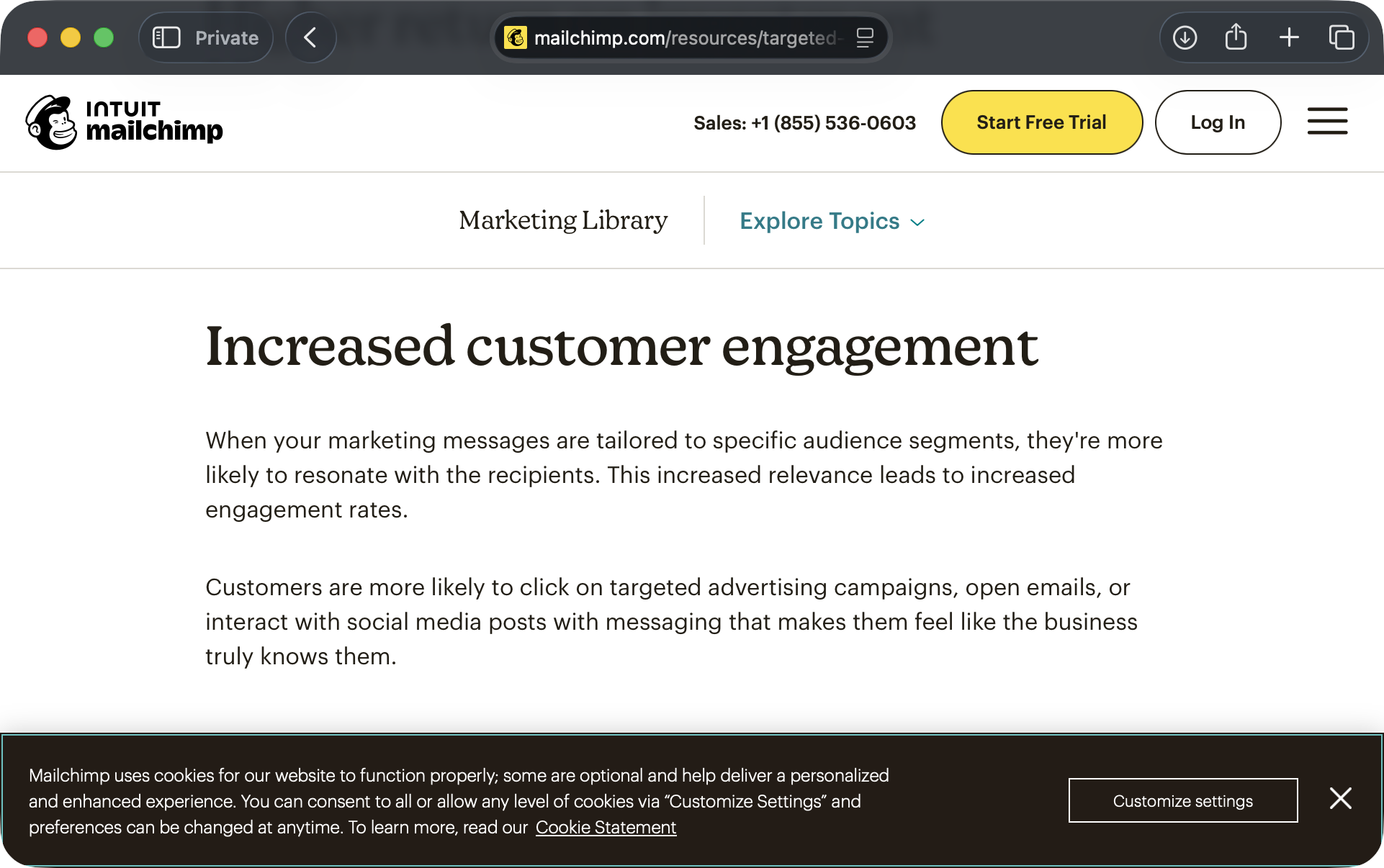
The insurance ad resonated with me, but for all the wrong reasons. Why would I want to buy something from a business that makes me "feel like the business truly knows [me]", when the reason it truly knows me is that it uses a company that collects my data and another company that aggregates that data to reach me?
What's next?
I probably will buy rental insurance, and likely from the company in the ad. Not because of the ad, but because it offered the cheapest quote. It's not like the other companies aren't using targeted ads. This company just happened to bid the highest in YouTube's real-time ad auction.
There are too many incredibly smart people working on how best to collect, cross-reference, and file increasingly disparate pieces of data, and the collection methods are so pervasive, to fully opt out of online tracking. Regardless, I try my best to do so:
- I deny any and all optional cookies on every single site that I browse.
- I block apps that request to track me.
- I disable voice control features of my personal devices.
- I use an adblocker that actively blocks third party tracking at the application level (at this moment, not at the DNS level, but I am setting my PiHole back up soon).
- I use a VPN to mask my public IP address.
Ultimately, I accept that my digital ad ID exists regardless of my efforts to opt out, and there's probably no way I'm going to escape it. I know that both private companies and government agencies3 buy this data, for a variety of purposes (targeted ads, algorithmic pricing, surveillance, counter-terrorism)4. I don't want to feel like I'm being tracked constantly, but the reality is that I am.
This anecdote about an ad for rental insurance slipping through the cracks on a device on which I can't put an adblocker5 only reminded me of the fact that this process goes on constantly, I just don't see the ads since I've blocked them on most of my devices. But I'll work on patching those cracks as soon as I can.
-
https://www.reddit.com/r/uBlockOrigin/comments/1vgcjg5/about_disgusting_facebook_devs/ (^)
-
For more info, Reddit's Director of Growth Marketing wrote an easily digestible explanation of how this process works. (^)
-
"Means of Control" (2024) by Byron Tau (^)
-
All of this occurs in Canada, a country that is ostensibly a free and liberal society. Much more insidious practices go on in other countries, even those that you may not perceive as the typical authoritarian regimes that we know of in the West. For instance, in Thailand, even defaming or criticizing the monarchy can land you long sentences in prison, a fact I learned from one of my best friends (a Thai citizen) after he asked me not to discuss the absurdity of the divine right of kings in our private group chat. (^)
-
Maybe I will write a longer post about this later but I believe that we should have the right to modify, repair, or otherwise alter the software, hardware, and firmware of items that you own. Unfortunately, the YouTube TV app is closed source and the code that runs it is copyrighted by Google, so we can't currently do that. If you're interested in this sort of thing, Cory Doctrow recently spoke about how Canadian right to repair laws currently work and argues for the legalization of jailbreaking in Canada as a way to counter American tariffs on Canada. (^)